
You built a website. Maybe you even paid someone to "do SEO" on it. Months later, you search your own business name plus your city, and you're nowhere near the top — or worse, nowhere at all. Meanwhile a competitor with a worse-looking site sits comfortably on page one.
This is one of the most common frustrations we hear from Pakistani business owners, and the good news is: it's almost never a mystery. In the vast majority of cases, a non-ranking website has one or more of the ten problems below. Read through them, check which apply to your site, and you'll know exactly what's actually holding you back.
Reason 1: Thin Content That Doesn't Actually Answer Anything
If your page is three sentences and a contact form, Google has almost nothing to evaluate — and neither does a visitor deciding whether to trust you. A page needs to genuinely answer the questions a real customer would have (pricing signals, process, what makes you different) before Google will consider it worth ranking above a more complete competitor.
Quick check: Open your homepage and your main service page. Would a stranger, reading only that page, understand exactly what you do, who it's for, and why they should choose you? If not, that's your first problem.
Reason 2: Google Can't Find or Index Your Pages
Sometimes the content is fine, but Google simply doesn't know the page exists, or has been told not to index it. This happens more often than you'd expect — a noindex tag left over from development, a missing or broken sitemap, or a robots.txt file accidentally blocking the whole site.
Quick check: Search site:yourdomain.com on Google. If pages you know exist don't show up in the results, this is likely your issue — and it's a technical fix, not a content one.
We've seen this exact problem on client sites built by well-meaning freelancers in Pakistan more than once: a "coming soon" noindex setting from the staging version of the site simply never got removed after launch, and the business had no idea its own homepage was invisible to Google for months.
Reason 3: Your Site Is Too Slow
Google's ranking systems directly measure page loading speed and responsiveness (called Core Web Vitals), and a slow site loses on two fronts at once: worse rankings, and visitors who leave before the page even finishes loading — especially the large share of Pakistani users browsing on mobile data rather than fast broadband or fibre.
Quick check: Run your homepage through Google's PageSpeed Insights. A "poor" score on mobile is a strong signal this is part of your ranking problem.
The most common culprit we find on Pakistani small business sites is a handful of massive, uncompressed image files — a 6MB photo straight from a phone camera used as a full-width hero banner, for example — that alone can add several seconds to load time on a typical 4G connection.
Reason 4: You Have Few or Zero Quality Backlinks
Even a perfectly built site struggles to outrank a competitor that other websites genuinely link to and vouch for. This is the "off-page" side of SEO, and it's the piece most Pakistani businesses skip entirely, focusing only on their own website. Closing this gap properly is exactly what our SEO services are built to do.
Quick check: Search your business name in Google along with -site:yourdomain.com to see if other sites mention or link to you. If almost nothing comes up, weak backlinks are very likely limiting you.
Reason 5: You're Not Actually Targeting the Keywords Your Customers Search
Plenty of websites are technically fine but simply never mention the phrases real customers type into Google. A page written entirely around "our mission and values" won't rank for "affordable web design Lahore" — because it never signals that it answers that specific search.
Quick check: Read your homepage and main pages. Do they naturally include the exact phrases a customer would search — service plus city, service plus problem — or only generic brand language?
Reason 6: Your Google Business Profile Is Missing, Unclaimed, or Neglected
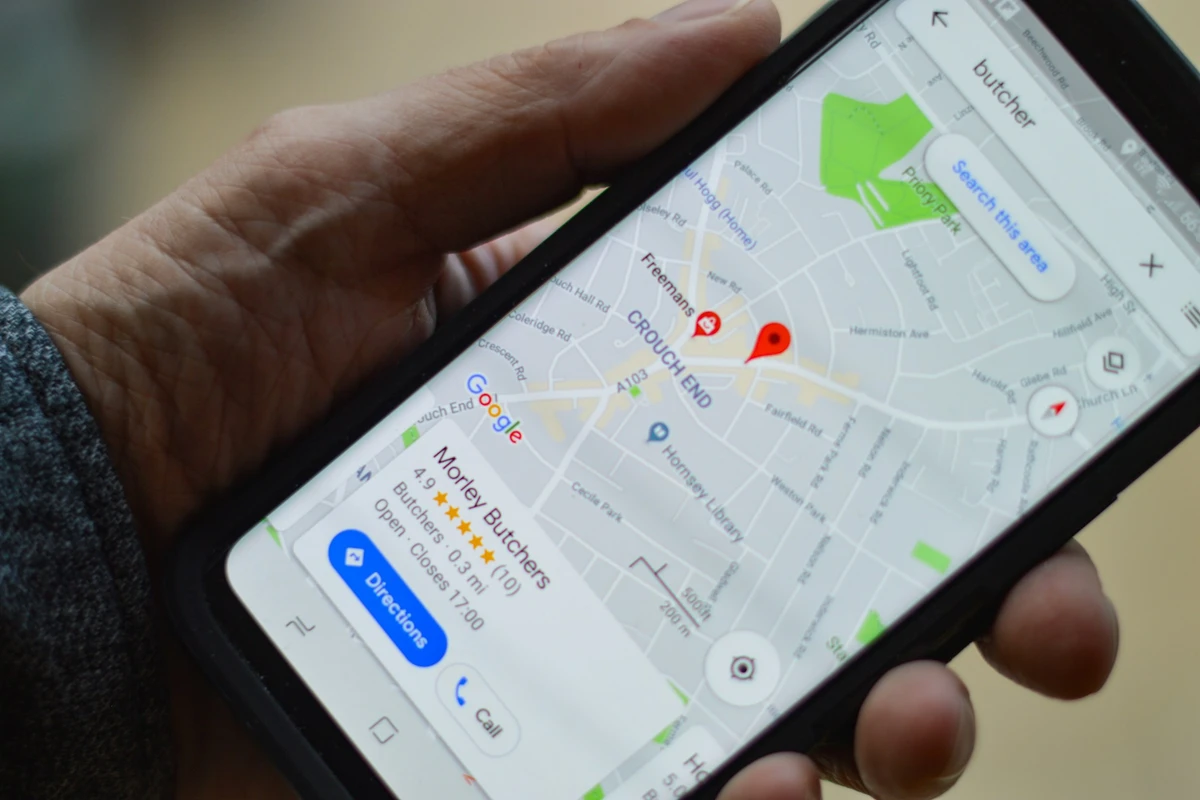
If you serve customers locally — a clinic, restaurant, salon, real estate agency — a huge share of your visibility comes from Google's local "map pack" results, not your website's organic ranking at all. An unclaimed or half-filled-out Google Business Profile means you're invisible in exactly the results your local customers see first.
Quick check: Search your business type plus your city on Google Maps. If you're not in the top 3 local results, or your profile has no photos, no category, or no reviews, this is very likely a major piece of your visibility problem.
For businesses serving customers locally — clinics in Lahore, salons in Karachi, real estate agencies in Islamabad — this single profile is often worth more visibility, faster, than months of website-only SEO work, simply because it's the first thing a nearby customer sees before they ever click through to a website at all. For a full walkthrough of getting this right, see our local SEO guide for Pakistani businesses.
Reason 7: Your Site Isn't Genuinely Mobile-Friendly
Google evaluates the mobile version of your site as the primary version for ranking purposes — not the desktop version, even if that's what looks better in your own browser. Tiny unreadable text, buttons too close together, or horizontal scrolling on a phone actively works against you.
Quick check: Open your own site on your phone, using only your thumb, the way a real customer would. If you find yourself pinching to zoom or struggling to tap the right button, so will they — and so will Google's evaluation of your site.
This matters more in Pakistan than in many markets — the overwhelming majority of local traffic to a small business site arrives on a phone, often over mobile data rather than Wi-Fi, so a desktop-first design isn't a minor inconvenience for a minority of visitors, it's actively failing most of the audience Google is evaluating your site against.
Reason 8: Your Site Is Genuinely New
If your website launched in the last few months, this alone can explain weak rankings — new sites generally take time to earn Google's trust, sometimes called the "sandbox" effect, regardless of how well-built they are. This isn't a flaw to fix; it's a timeline to plan around, and it's exactly why starting your SEO and content work early matters more than perfecting every detail before launch.
For most competitive keywords in Pakistani cities, expect a realistic timeline of three to six months before a brand-new site is genuinely competing for page-one positions, even doing everything else right. Business owners who expect page-one rankings within the first few weeks of launch are almost always disappointed, not because anything is broken, but because that timeline was never realistic to begin with.
Reason 9: A Competitor Is Simply Doing More, Better
Sometimes there's no single broken thing — a competitor just has more content, more backlinks, a faster site, and more reviews, across the board. This is common in competitive cities like Lahore and Karachi for popular services (restaurants, clinics, real estate).
The fix isn't panic, it's a genuine gap analysis. Open the top three results for your main keyword side by side with your own page and compare, honestly: Who has more genuinely useful content, not just more words? Who has more reviews, and how recent are they? Who loads faster on a mid-range Android phone on mobile data — which is how most searchers in Pakistan will actually experience both sites? Whoever is ahead on the most of these, in the searcher's actual experience, is why they're ahead in the rankings. This comparison alone usually reveals two or three concrete, specific gaps worth closing, rather than a vague sense that "they're just better."
Reason 10: Silent Technical Errors
Broken internal links, duplicate content across near-identical pages (a common issue on multi-city location pages that only swap the city name), incorrect canonical tags, or redirect chains can all quietly suppress rankings without any obvious symptom on the surface of the site.
Quick check: Use Google Search Console's coverage report — if it shows a meaningful number of "excluded" or "error" pages you expected to be indexed, a technical issue is very likely part of your problem.
A common example on multi-location sites: three near-identical city pages that differ only by swapping "Lahore" for "Karachi" for "Islamabad," with the same paragraphs otherwise. Google can treat these as near-duplicates and choose to index only one of the three — quietly costing you visibility in the other two cities without any obvious error message anywhere.
Do You Need to Fix All Ten at Once?
No — and trying to is usually why business owners give up on SEO halfway through. Most sites have two or three of these problems doing most of the damage, not all ten equally. A site with excellent content but a broken Google Business Profile doesn't need a content rewrite; it needs ten minutes claiming and filling out one listing. A technically flawless site with thin, generic pages doesn't need a developer; it needs better writing. Diagnosing which two or three apply to you, rather than attacking all ten in parallel, is what actually moves the needle fastest.
If fixing these yourself isn't realistic given your time or the depth of the problem, it's worth knowing what professional help actually costs before deciding — see our SEO pricing guide for Pakistan for real numbers, and our guide on choosing the right SEO agency once you're ready to compare providers.
Frequently Asked Questions
How long does it take to start ranking after fixing these issues?
It depends on which issues applied and how competitive your city and industry are. Simple fixes — claiming a Google Business Profile, fixing broken links — can show local visibility improvements within days to a few weeks. Content and backlink-driven improvements typically take 60–120 days to show clearly in rankings, which is why the case studies below are measured in months, not days.
My website is only a few months old — is that the whole problem?
It's part of it, but rarely all of it. A new site does need time to earn trust, but a new site that's also thin on content, slow, and has no Google Business Profile activity will rank far worse and far slower than a new site that's genuinely complete in every other respect. Use the waiting period productively — most of the ten reasons above are fixable while you wait out the trust curve.
Can I fix these myself, or do I need an agency?
Several of the ten — Google Business Profile setup, obvious broken links, image compression, rewriting a couple of thin pages — are realistic for a business owner to do in a weekend. The ones that compound over months (backlinks, ongoing technical health, correctly prioritising which issue matters most for your specific site) are where most DIY efforts stall out, simply because they require sustained, correctly-sequenced effort rather than a single afternoon of work.
Self-Diagnosis: Match Your Symptom to the Likely Cause
| What You're Seeing | Most Likely Cause | Where to Check |
|---|---|---|
| Site doesn't appear at all, even for your brand name | Indexing/crawlability issue | site:yourdomain.com search |
| You rank, but far below competitors | Thin content or weak backlinks | Compare page depth vs. top result |
| Rank fine on desktop, invisible on mobile searches | Mobile usability issue | Test the site on your own phone |
| Show up in Google Search, invisible on Google Maps | Google Business Profile neglected | Search your service + city on Maps |
| Slow-loading pages, high bounce | Core Web Vitals / page speed | PageSpeed Insights test |
| Site launched recently, patience is genuinely the answer | New site trust period | Check domain age vs. expected timeline |
What It Actually Takes to Fix These Yourself
Several of these are genuinely fixable without hiring anyone: claiming and filling out your Google Business Profile properly, compressing oversized images, fixing obvious broken links, and rewriting thin pages with real, specific detail are all within reach for a motivated business owner with a few focused hours.
Where it gets harder is anything requiring ongoing, technical, or compounding effort: diagnosing Core Web Vitals issues buried in your site's code, building a genuine backlink profile over months (not a one-time task), restructuring a site's information architecture to fix duplicate content across dozens of pages, or correctly prioritising which of these ten issues to tackle first when several apply at once. This is less about any single fix being impossible, and more about the fact that doing all of it correctly, consistently, and in the right order is close to a full-time discipline — which is exactly why most businesses that try to DIY their SEO end up doing the easy 20% and never getting to the 80% that actually moves rankings.
There's also an opportunity cost most business owners don't factor in. The hours spent reading documentation on Core Web Vitals thresholds, testing redirect chains, or figuring out why a sitemap isn't updating correctly are hours not spent running the actual business — serving customers, managing staff, closing sales. For a solo owner or a small team, that tradeoff is often the real deciding factor, more than whether the technical fix itself is theoretically learnable.
What Fixing These Actually Looks Like
This isn't theoretical. A Lahore restaurant we worked with had almost every issue on this list — thin content, no Google Business Profile activity, and a slow site — and climbed to a top-3 Google Maps position while doubling monthly website visitors within 90 days. An Islamabad law firm went from effectively invisible online to ranking on page one for 15 high-intent keywords within 120 days, once the content, technical, and backlink gaps were addressed together rather than one at a time. A Lahore real estate business fixed weak page structure and unclear calls to action and saw an 85% jump in lead conversion within 45 days — proof that ranking and converting visitors are related but separate problems, both worth solving.
None of these results came from a single fix — they came from correctly diagnosing which of the ten issues above actually applied, in what order, and fixing them systematically.
Not sure which of these ten is actually holding your site back? Get a free ranking diagnostic from Axionix Technology — we'll check your site against all ten causes above and tell you exactly what's fixable this week versus what needs an ongoing strategy. If you want to go deeper on the on-page side specifically, read our complete on-page SEO guide next.
Need Help With Your Digital Marketing?
Get a free audit from our team and find out exactly what's holding your business back online.
Get Free Audit →